
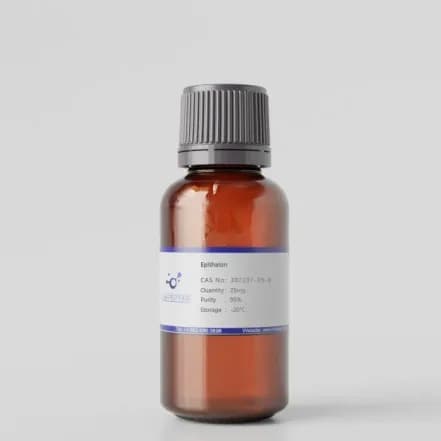
EpithalonIn Stock
Anti-Aging

Epithalon

$118.00Was $158.00Save $40

A synthetic tetrapeptide (Ala-Glu-Asp-Gly) bioregulator used in longevity research for studying telomerase activation, telomere lengthening, and circadian regulation.

Specifications

CAS Number
307297-39-8
Purity
>98% by HPLC
Form
Lyophilized powder
Storage
Lyophilized: -20°C. Reconstituted: 4°C, use within 14 days.
Solubility
Soluble in sterile water
Target
Telomerase reverse transcriptase (TERT); epigenetic regulation of telomere maintenance; pineal hormone axis
Sequence
Ala-Glu-Asp-Gly (AEDG; 4 aa Khavinson tetrapeptide bioregulator; pineal gland extract-derived)
Molecular Formula
C14H22N4O9
Molecular Weight
390.35 g/mol

Quantity

1× $118.00 = $118.00
View CartCOA Soon

Research Overview

Epithalon (Epitalon; Ala-Glu-Asp-Gly) is a synthetic tetrapeptide developed by Prof. Vladimir Khavinson at the St. Petersburg Institute of Bioregulation and Gerontology, based on a biologically active peptide fraction isolated from the bovine pineal gland. The pineal gland produces melatonin and is considered a master circadian and neuroendocrine regulator; the peptide fraction from which Epithalon was derived was observed to extend the lifespan of experimental animals and was subsequently characterized as the tetrapeptide AEDG. Research on Epithalon in cell culture has demonstrated that it stimulates telomerase (TERT) expression in human somatic cells, including fetal fibroblast and retinal pigment epithelium cultures, resulting in measured lengthening of telomere repeat sequences as confirmed by quantitative FISH (Q-FISH) and Southern blot telomere length assays. Longitudinal studies in Drosophila melanogaster and rodent models have reported statistically significant lifespan extensions with Epithalon treatment, attributed mechanistically to telomere preservation, reduced oxidative damage markers (8-OHdG, lipid peroxidation), and maintenance of circadian melatonin synthesis capacity in aged pinealocytes. In aged rat models, Epithalon administration has been associated with normalization of corticotropin-releasing hormone and cortisol rhythmicity, reduced hepatic lipid peroxidation, and restoration of antioxidant enzyme activities (superoxide dismutase, catalase). These multi-parameter readouts suggest pleiotropic anti-aging effects that may involve telomerase activation, epigenetic DNA methylation changes, and indirect modulation of neuroendocrine aging processes. Epithalon has also been investigated in cancer prevention research, where telomerase reactivation in normal cells must be distinguished from telomerase upregulation in cancer cells. Studies in aged rodents with chemically induced colon and mammary carcinogenesis show reduced tumor incidence in Epithalon-treated groups, interpreted as reflecting improved immune surveillance and reduced oxidative DNA damage rather than direct antiproliferative activity. Its small, well-defined tetrapeptide structure makes Epithalon suitable for exploring whether ultrashort peptides can serve as epigenetic modulators that recapitulate aspects of youthful gene expression patterns, making it a widely studied compound in the biogerontology research field.

Research Use Only — Important Notice. For research use only. Not for human or veterinary use. Not intended for diagnostic or therapeutic purposes. Keep out of reach of children.

Research & Laboratory Use Only

All products on this site are sold strictly for research and laboratory use only. They are not intended for human consumption, diagnostic, or therapeutic purposes. Some compounds like Semaglutide and Tirzepatide are being studied in clinical settings for metabolic research and weight management, but any human use is outside the scope of this website and should only be done under medical supervision.