
 In Stock
Fat Loss Research
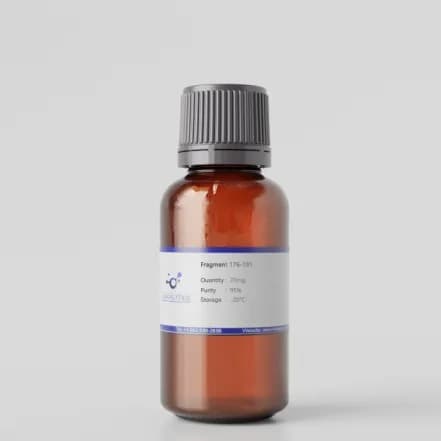
Fragment 176-191
$108.00Was $148.00Save $40
A 16-amino acid fragment of human growth hormone used in lipolysis research. Studies fat metabolism regulation and adipocyte receptor interactions.
Specifications
- CAS Number
- 221231-10-3
- Purity
- >98% by HPLC
- Form
- Lyophilized powder
- Storage
- Lyophilized: -20°C. Reconstituted: 4°C, use within 28 days.
- Solubility
- Soluble in sterile water
- Target
- Growth hormone receptor (GHR) lipolytic domain; adipocyte β3-adrenergic and IGF-1-independent pathways
- Sequence
- Tyr-Leu-Arg-Ile-Val-Gln-Cys-Arg-Ser-Val-Glu-Gly-Ser-Cys-Gly-Phe (16 aa, C-terminal fragment of hGH positions 176-191)
- Molecular Formula
- C78H123N21O23S
- Molecular Weight
- 1817.1 g/mol
Quantity
1× $108.00 = $108.00
View CartCOA Soon
Research Overview
Fragment 176-191 is a 16-amino acid C-terminal peptide of human growth hormone (hGH) spanning residues 176–191 of the 191-amino acid native hormone. It was identified through systematic receptor-binding and functional studies as the region of hGH responsible for lipolytic (fat-mobilizing) activity, while being devoid of the mitogenic, diabetogenic, and insulin-antagonistic effects associated with the full-length molecule. This selective activity profile — potent fat mobilization without systemic growth-promoting or metabolic side effects — distinguishes Fragment 176-191 from intact recombinant human GH.
The mechanism involves selective engagement of the growth hormone receptor's lipolytic signaling pathway within adipocytes, activating adenylyl cyclase and increasing intracellular cAMP, which activates hormone-sensitive lipase (HSL) and triggers triglyceride hydrolysis and free fatty acid (FFA) release. Research demonstrates that Fragment 176-191 stimulates lipolysis approximately 12.5-fold more potently than full-length hGH on a molar basis in isolated adipocyte assays, while producing no detectable insulin resistance or mitogenic activity. Animal studies confirm selective reduction in visceral and subcutaneous adipose depots with preservation of lean body mass.
Preclinical studies in obese rodent models demonstrate significant reductions in body weight, fat mass percentage, and adipose cell size without alterations in blood glucose or insulin sensitivity. The peptide enhances metabolic rate by increasing fat substrate utilization during both rest and exercise. Research applications include obesity and metabolic syndrome, selective GH receptor pharmacology, and adipocyte biology. The lack of growth-promoting and diabetogenic effects makes Fragment 176-191 a valuable tool for isolating lipolytic mechanisms from other GH functions.
Research Use Only — Important Notice. For research use only. Not for human or veterinary use. Not intended for diagnostic or therapeutic purposes. Keep out of reach of children.
Research & Laboratory Use Only
All products on this site are sold strictly for research and laboratory use only. They are not intended for human consumption, diagnostic, or therapeutic purposes. Some compounds like Semaglutide and Tirzepatide are being studied in clinical settings for metabolic research and weight management, but any human use is outside the scope of this website and should only be done under medical supervision.