
 In Stock
Growth Hormone Peptides
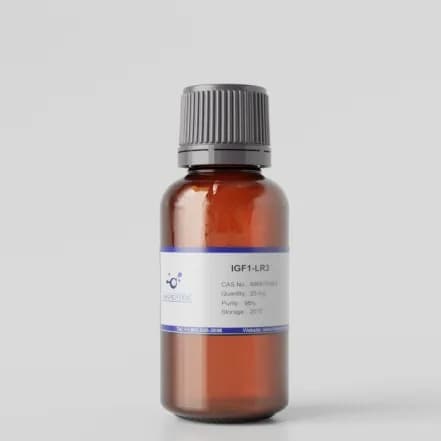
IGF1-LR3
$258.00Was $298.00Save $40
Long R3 insulin-like growth factor-1 with extended half-life. Used in cellular growth and muscle tissue proliferation research.
Specifications
- CAS Number
- 946870-92-4
- Purity
- >98% by HPLC
- Form
- Lyophilized powder
- Storage
- Lyophilized: -20°C. Reconstituted: 4°C, use within 28 days.
- Solubility
- Soluble in sterile water with 0.1% acetic acid
- Target
- IGF-1 receptor (IGF-1R), transmembrane receptor tyrosine kinase
- Molecular Formula
- C400H625N111O115S9
- Molecular Weight
- 9117.5 g/mol
Quantity
1× $258.00 = $258.00
View CartCOA Soon
Research Overview
IGF-1 LR3 (Long-Arg3-IGF-1) is a synthetic 83-amino acid analog of human insulin-like growth factor-1 (IGF-1) engineered with two key modifications: substitution of glutamic acid with arginine at position 3 and addition of a 13-amino acid N-terminal extension. Together these alterations dramatically reduce affinity for insulin-like growth factor-binding proteins (IGFBPs), which normally sequester IGF-1 in the circulation and limit its bioavailability. The result is approximately 3-fold greater potency than native IGF-1 and an extended plasma half-life of 20–30 hours versus 12–15 hours for the native hormone.
Upon binding to the IGF-1 receptor — a transmembrane receptor tyrosine kinase — IGF-1 LR3 triggers autophosphorylation and initiates downstream PI3K/Akt and MAPK signaling cascades. PI3K/Akt activation drives protein synthesis, glucose uptake, and cell survival; MAPK activation promotes cellular proliferation and differentiation. In skeletal muscle research, IGF-1 LR3 stimulates satellite cell (myoblast) proliferation producing myonuclear hyperplasia, and drives myofibrillar protein synthesis causing hypertrophic fiber growth. In adipose tissue, it enhances lipolysis and triglyceride mobilization through IGF-1R-mediated pathways.
Research applications include investigation of muscle wasting disorders (cachexia, sarcopenia), growth hormone deficiency, cellular senescence, and metabolic disease. The compound's superior pharmacokinetic profile versus native IGF-1 makes it the preferred research tool for isolating IGF-1R-mediated signaling from short-lived endogenous peptide effects.
Research Use Only — Important Notice. For research use only. Not for human or veterinary use. Not intended for diagnostic or therapeutic purposes. Keep out of reach of children.
Research & Laboratory Use Only
All products on this site are sold strictly for research and laboratory use only. They are not intended for human consumption, diagnostic, or therapeutic purposes. Some compounds like Semaglutide and Tirzepatide are being studied in clinical settings for metabolic research and weight management, but any human use is outside the scope of this website and should only be done under medical supervision.