
 In Stock
Immune Support
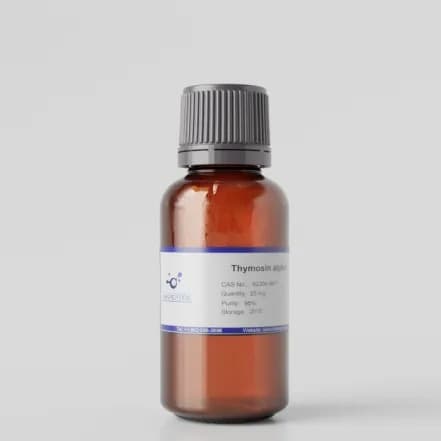
Thymosin Alpha 1
$260.00Was $300.00Save $40
A naturally occurring thymic peptide used in immune system modulation research. Studies T-cell maturation, NK cell activation, and immune response pathways.
Specifications
- CAS Number
- 62304-98-7
- Purity
- >98% by HPLC
- Form
- Lyophilized powder
- Storage
- Lyophilized: -20°C. Reconstituted: 4°C, use within 28 days.
- Solubility
- Soluble in sterile water
- Target
- Toll-like receptors (TLR2, TLR4, TLR7, TLR9); dendritic cells; T-cell and NK cell maturation
- Sequence
- Ac-Ser-Asp-Ala-Ala-Val-Asp-Thr-Ser-Ser-Glu-Ile-Thr-Thr-Lys-Asp-Leu-Lys-Glu-Lys-Lys-Glu-Val-Val-Glu-Glu-Ala-Glu-Asn (28 aa, N-terminally acetylated)
- Molecular Formula
- C129H215N33O55
- Molecular Weight
- 3108.1 g/mol
Quantity
1× $260.00 = $260.00
View CartCOA Soon
Research Overview
Thymosin Alpha-1 (Tα1) is a 28-amino acid thymic peptide produced naturally by thymic epithelial cells, where it plays a central role in T-lymphocyte development and immunological maturation. The N-terminal acetylation is essential for biological activity, protecting against aminopeptidase degradation and enabling receptor engagement. Tα1 binds to Toll-like receptors (particularly TLR2, TLR4, TLR7, and TLR9) on dendritic cells and plasmacytoid dendritic cells, triggering downstream IRF3 and NF-κB signaling pathways that drive maturation of the innate and adaptive immune response.
Through dendritic cell activation, Tα1 promotes differentiation of naive T-cell progenitors into effector T-cell subsets, enhances CD4+/CD8+ T-cell ratios, and stimulates production of key cytokines including IL-2, IFN-γ, and IL-12. It also activates natural killer (NK) cells and augments antibody-dependent cellular cytotoxicity (ADCC). In immunocompromised states — including viral infections, malignancy, and aging-related immunosenescence — Tα1 restores homeostatic immune function by replenishing mature T-cell output from a functionally declining thymus.
Clinical research has validated Tα1 (marketed as Zadaxin®) for treatment of chronic hepatitis B and C, where it improves antiviral immune responses and seroconversion rates. Studies demonstrate efficacy in sepsis-associated immunosuppression, HIV infection, cancer immunotherapy (improving response to chemotherapy and checkpoint inhibitors), and vaccine adjuvancy in elderly populations. The peptide's excellent safety profile, confirmed across decades of clinical use, makes it a valuable research tool for immunomodulation studies.
Research Use Only — Important Notice. For research use only. Not for human or veterinary use. Not intended for diagnostic or therapeutic purposes. Keep out of reach of children.
Research & Laboratory Use Only
All products on this site are sold strictly for research and laboratory use only. They are not intended for human consumption, diagnostic, or therapeutic purposes. Some compounds like Semaglutide and Tirzepatide are being studied in clinical settings for metabolic research and weight management, but any human use is outside the scope of this website and should only be done under medical supervision.