
 In Stock
Healing & Recovery
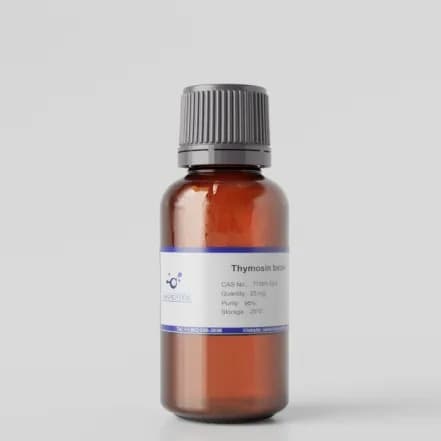
Thymosin Beta 4
$305.00Was $345.00Save $40
A ubiquitous 43-amino acid peptide used in tissue repair and angiogenesis research. Studies actin sequestration, wound healing, and cardiac regeneration.
Specifications
- CAS Number
- 61556-14-7
- Purity
- >98% by HPLC
- Form
- Lyophilized powder
- Storage
- Lyophilized: -20°C. Reconstituted: 4°C, use within 28 days.
- Solubility
- Soluble in sterile water
- Target
- G-actin monomers (β/γ-actin); Wnt/β-catenin signaling; VEGF and FGF angiogenic pathways
- Sequence
- Ser-Asp-Lys-Pro-Asp-Met-Ala-Glu-Ile-Glu-Lys-Phe-Asp-Lys-Ser-Lys-Leu-Lys-Lys-Thr-Glu-Thr-Gln-Glu-Lys-Asn-Pro-Leu-Pro-Ser-Lys-Glu-Thr-Ile-Glu-Gln-Glu-Lys-Gln-Ala-Gly-Glu-Ser (43 aa)
- Molecular Formula
- C212H350N56O78S
- Molecular Weight
- 4963.5 g/mol
Quantity
1× $305.00 = $305.00
View CartCOA Soon
Research Overview
Thymosin Beta-4 (Tβ4) is a 43-amino acid peptide originally isolated from thymic tissue and now recognized as one of the most abundant intracellular proteins in mammalian cells. Its primary function is binding G-actin monomers through the LKKTET actin-binding domain, sequestering them from polymerization and regulating the dynamic equilibrium between monomeric G-actin and filamentous F-actin. By controlling actin cytoskeletal dynamics, Tβ4 governs cell migration, morphology, and contractility — essential processes in wound healing, tissue remodeling, and organ repair.
Tβ4 exerts potent pro-regenerative effects through multiple coordinated pathways. It activates Wnt/β-catenin signaling, stimulating progenitor cell proliferation and differentiation. It upregulates VEGF (vascular endothelial growth factor), FGF-2, and EGF secretion, driving angiogenesis and re-epithelialization. In cardiac tissue, Tβ4 promotes cardiomyocyte survival post-ischemia, reduces apoptosis, activates resident cardiac progenitor cells, and stimulates new coronary vessel formation. The PRIMUS trial demonstrated that systemic Tβ4 administration following myocardial infarction reduced infarct size and improved left ventricular function in clinical subjects.
Additional research has characterized Tβ4's neuroprotective effects (promoting oligodendrocyte differentiation and remyelination in spinal cord injury models), anti-inflammatory properties (suppressing NF-κB and reducing TNF-α, IL-1β, and IL-6), and accelerated healing in musculoskeletal injuries (tendon, ligament, bone). The peptide holds FDA Investigational New Drug (IND) status for clinical trials in acute myocardial infarction, epidermolysis bullosa, and chronic non-healing wounds, representing one of the most extensively researched regenerative peptides.
Research Use Only — Important Notice. For research use only. Not for human or veterinary use. Not intended for diagnostic or therapeutic purposes. Keep out of reach of children.
Research & Laboratory Use Only
All products on this site are sold strictly for research and laboratory use only. They are not intended for human consumption, diagnostic, or therapeutic purposes. Some compounds like Semaglutide and Tirzepatide are being studied in clinical settings for metabolic research and weight management, but any human use is outside the scope of this website and should only be done under medical supervision.