
 In Stock
Other Research Peptides
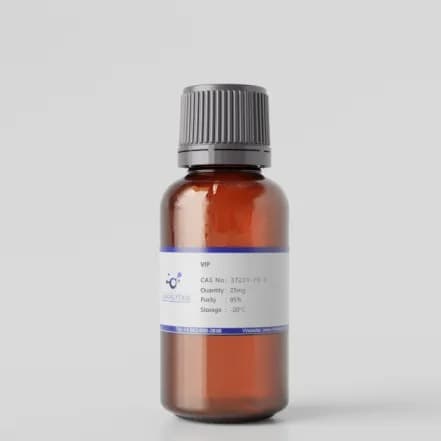
VIP (Vasoactive Intestinal Peptide)
$138.00Was $178.00Save $40
A 28-amino acid neuropeptide used in smooth muscle and immune research. Studies vasodilation, bronchodilation, and anti-inflammatory mechanisms.
Specifications
- CAS Number
- 40077-57-4
- Purity
- >98% by HPLC
- Form
- Lyophilized powder
- Storage
- Lyophilized: -20°C. Reconstituted: 4°C, use within 28 days.
- Solubility
- Soluble in sterile water
- Target
- VPAC1 and VPAC2 G protein-coupled receptors; Gs/adenylyl cyclase/cAMP/PKA pathway
- Sequence
- His-Ser-Asp-Ala-Val-Phe-Thr-Asp-Asn-Tyr-Thr-Arg-Leu-Arg-Lys-Gln-Met-Ala-Val-Lys-Lys-Tyr-Leu-Asn-Ser-Ile-Leu-Asn-NH2 (28 aa, C-terminal amide)
- Molecular Formula
- C147H237N43O43S
- Molecular Weight
- 3323.77 g/mol
Quantity
1× $138.00 = $138.00
View CartCOA Soon
Research Overview
Vasoactive Intestinal Peptide (VIP) is a 28-amino acid neuropeptide belonging to the glucagon/secretin superfamily, characterized by a C-terminal amide modification essential for receptor binding. It is widely distributed throughout the central and peripheral nervous systems, the gastrointestinal tract, the respiratory system, and immune tissues. VIP binds with nanomolar affinity to two G protein-coupled receptor subtypes — VPAC1 (expressed in lung, small intestine, liver, and T lymphocytes) and VPAC2 (expressed in brain, retina, pancreas, and smooth muscle) — both coupling to Gs proteins and activating adenylyl cyclase, elevating intracellular cAMP and protein kinase A (PKA) activity.
In the cardiovascular and smooth muscle systems, VIP is a potent vasodilator and bronchodilator, acting through cAMP-mediated myosin light chain kinase inhibition and calcium channel regulation. In the gastrointestinal tract, VIP regulates water and electrolyte secretion, relaxes sphincter tone, and modulates intestinal peristalsis. In the immune system, VIP exerts anti-inflammatory effects by inhibiting NF-κB activation and reducing TNF-α, IL-6, and IL-12 production while promoting regulatory T-cell differentiation and IL-10 secretion. This potent immunomodulatory profile has positioned VIP as a research target for autoimmune diseases including rheumatoid arthritis, inflammatory bowel disease, and multiple sclerosis.
In neuroscience research, VIP plays a critical role in suprachiasmatic nucleus (SCN) circadian rhythm coordination, where VPAC2 receptor signaling synchronizes neuronal oscillators across the master pacemaker. Research applications span pulmonary arterial hypertension (where VIP deficiency has been documented), metabolic syndrome (pancreatic VIP regulates insulin secretion), neuroinflammation, and sepsis-associated immunosuppression. VIP's dual roles as a neurotransmitter, vasodilator, and immunomodulator make it one of the most pleiotropic research peptides currently under investigation.
Research Use Only — Important Notice. For research use only. Not for human or veterinary use. Not intended for diagnostic or therapeutic purposes. Keep out of reach of children.
Research & Laboratory Use Only
All products on this site are sold strictly for research and laboratory use only. They are not intended for human consumption, diagnostic, or therapeutic purposes. Some compounds like Semaglutide and Tirzepatide are being studied in clinical settings for metabolic research and weight management, but any human use is outside the scope of this website and should only be done under medical supervision.